What is the sin of greed?
Greed (Latin avaritia, the root of "avarice") is an excessive desire to acquire and keep wealth, possessions or status. The problem is not owning things or wanting financial security. Greed is when "enough" keeps moving: every gain becomes the new baseline, and letting go of anything feels like a loss.
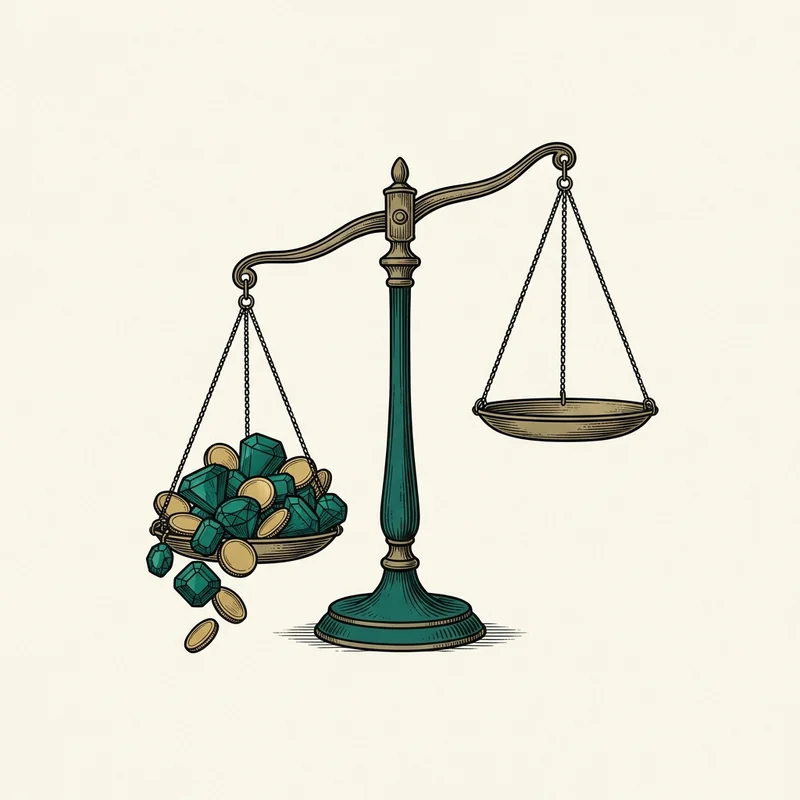
Medieval writers described greed as a sin of grasping. Where gluttony consumes, greed hoards. Thomas Aquinas noted that it is directed at external goods that, by their nature, cannot be shared without being diminished, which is why greed so easily turns people against one another.
Signs of greed in everyday life
Greed today rarely looks like a dragon on a pile of gold. More often the signs look like this:
- Constant upgrading. A phone, a car, a salary or a follower count that never feels like enough.
- Scorekeeping. You track who paid last, who owes whom and what everyone earns.
- Hoarding "just in case". Closets, carts and storage full of things you will "definitely need someday".
- Side-hustle tunnel vision. Every hobby and friendship gets evaluated for what it could earn.
- Difficulty giving. Donations, tips and gifts feel painful, even when you can afford them.
- Status spending. Buying things mainly because of what they signal to others.
- Win-lose thinking. Someone else getting a good deal feels like money taken from you.
- Anxiety about loss. You check balances, prices or portfolios far more often than you need to.
Greed often hides behind pride, with wealth worn as proof that you are better, and it can turn into wrath when someone threatens what you hold.
Research on materialism consistently links a strong focus on money and possessions with lower well-being, which mirrors the old moral insight: greed promises satisfaction and delivers restlessness.
Greed vs healthy ambition
Wanting financial security, a better job or a nicer home is not greed. Ambition becomes greed when the goal has no limit and when getting it starts to cost people or principles. Some quick checks:
- Purpose: ambition knows what the money is for; greed wants more for its own sake.
- Enough: ambition can name a finish line; greed keeps moving it.
- People: ambition builds others up along the way; greed treats them as tools or competitors.
- Giving: ambition can share the rewards; greed feels every gift as a loss.
A high Greed score often belongs to capable, driven people. The aim is to keep the drive and lose the grip.
Greed in tradition and history
The tenth commandment forbids coveting a neighbor's house or goods (Exodus 20:17). Jesus warns, "Take care, and be on your guard against all covetousness, for one's life does not consist in the abundance of his possessions" (Luke 12:15), and Paul writes that "the love of money is a root of all kinds of evils" (1 Timothy 6:10). In Dante's Purgatorio, the avaricious lie face down on the ground, bound and unable to look up, because they fixed their eyes on earthly goods. Literature is full of greed's cautionary tales: King Midas, whose touch turns even his food to gold, and Ebenezer Scrooge in Dickens's A Christmas Carol, who is redeemed only when he learns to give.
The strengths hidden inside greed
A high Greed score in the 7 deadly sins test often comes with genuine strengths: strategic thinking, discipline with money, ambition and a talent for building something from nothing. These are valuable. They become a problem only when accumulation turns into the goal itself.
How to balance greed with charity
Charity, or generosity, is the traditional cure for greed, and it works best as a habit:
- Define "enough". Write down a specific number or state of life that counts as enough this year.
- Give on a schedule. A fixed monthly donation or act of help takes the agonizing out of giving.
- Declutter with purpose. Give away one item a week that someone else would use more than you.
- Spend on experiences and people. Shared meals and time with friends tend to bring more lasting satisfaction than objects.
- Celebrate other people's gains. Greed sees wealth as a fixed pie; generosity sees it as something that can grow.
Greed often pairs with Envy (wanting what others have) and Gluttony (consuming more than you need). If one of those was your runner-up, read that guide next.
Want to know how much greed is in your profile? Take the free 7 deadly sins test and see your score for all seven sins.